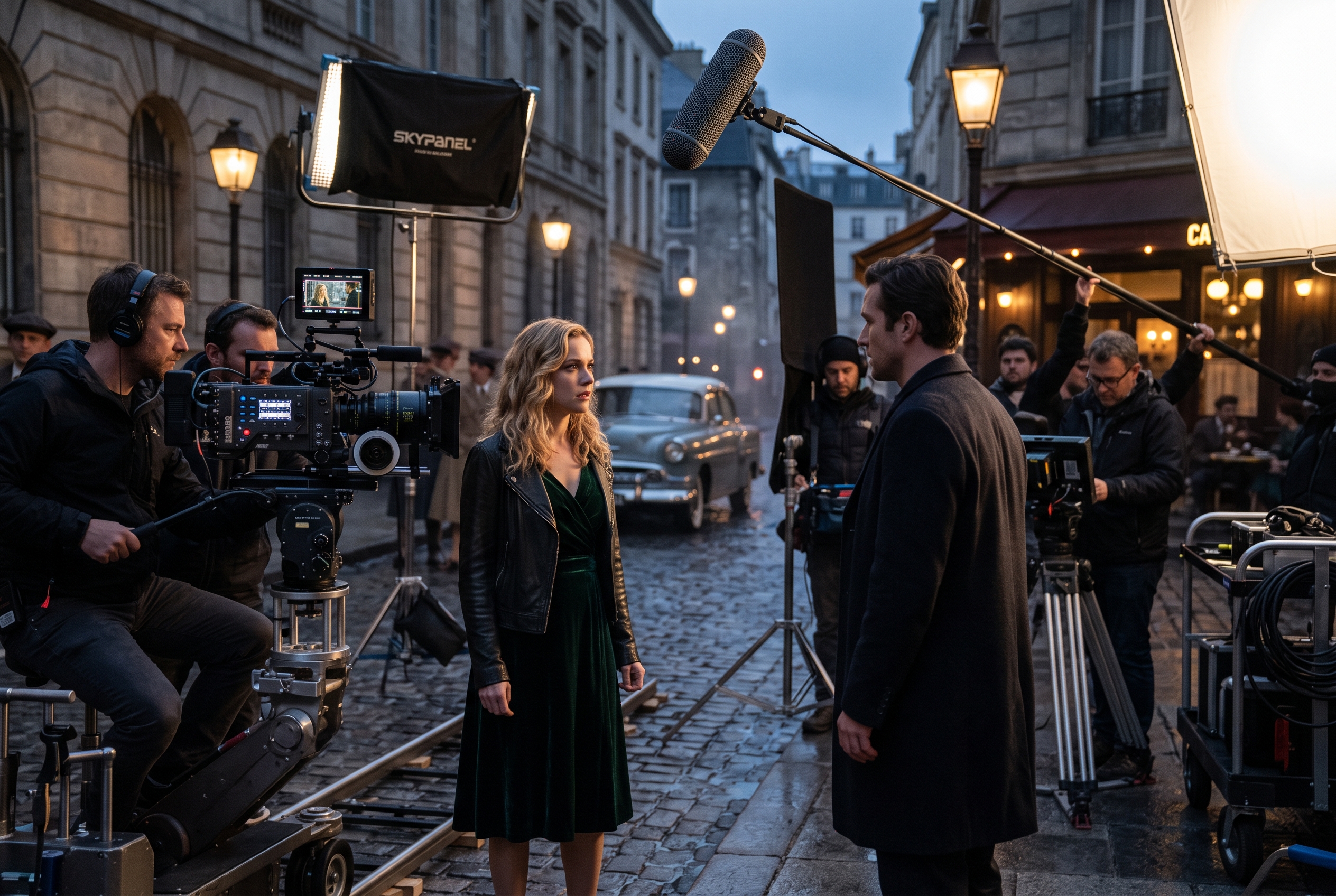
As of April 2026, the landscape of technology has shifted from complex, high-barrier enterprise systems toward tools that fit into the palm of your hand. Nanobanana AI represents the pinnacle of this movement, offering a level of accessible artificial intelligence that was previously reserved for data scientists and prompt engineers. While 2024 was defined by massive, power-hungry models, 2026 is the year of the lightweight companion, a year where efficiency and usability have finally overtaken raw parameter counts. This Kunya beginner guide will explore how these everyday AI tools are transforming the human experience, making high-level intelligence available to the common man, the student, and the hobbyist alike.
The AI Democratization Movement of 2026
The first quarter of 2026 has seen a massive push toward democratization in the tech sector. We have moved past the era where "more compute" was the only solution to every problem. Today, users demand responsiveness, precision, and a low barrier to entry. This is where Nanobanana AI excels, as it focuses on making complex creative and analytical tasks feel as simple as sending a text message.
In the current market, accessible artificial intelligence is no longer just a marketing slogan; it is a functional requirement. Users are tired of paying for massive subscriptions that they only use for 5 percent of their daily tasks. By integrating models like Nanobanana into the Kunya platform, we allow creators to access "just enough" intelligence for the task at hand, whether that is editing a photo, scheduling a week of meals, or learning a new language.
The rise of the personal AI assistant 2026 marks a turning point in how we perceive technology. It is no longer an "other" that we consult for specific work tasks. Instead, it has become a collaborative partner that assists in the mundane, the creative, and the intellectual growth of the individual. This shift ensures that the human remains at the center of the experience, with the technology serving as an amplifier rather than a replacement.
Defining Nanobanana AI: Accessible Artificial Intelligence
To understand Nanobanana, one must look at its lineage. Originating as a derivative of Google’s advanced Gemini 3 architecture, Nanobanana was specifically "distilled" to prioritize speed and image-editing precision over heavy-duty reasoning. It is often referred to technically as the Gemini 3.1 Flash Image variant, but the public has embraced the "Nanobanana" moniker for its playful, approachable nature. For more on the underlying architecture, you can read about Gemini 3.1 Flash-Lite, which shares some of its core low-latency characteristics.
The model is a native multimodal transformer, meaning it does not just "see" images as an afterthought. It understands pixels and prose in the same mathematical space. This allows for a level of accessible artificial intelligence that feels intuitive. You do not need to learn a specific syntax to use it; you simply speak to it like you would a human assistant. If you ask it to "make my shirt blue while keeping the lighting the same," it understands the physical properties of light and fabric without requiring a 50-word technical prompt.
Statistically, Nanobanana has captured a significant portion of the entry-level market. As of April 2026, it holds approximately 21.5 percent of the global professional AI chatbot market for quick-turnaround creative tasks. Its success lies in its "one-shot" capability, where it delivers the desired result on the first attempt more often than heavyweights like GPT-5, which may overthink simple creative requests.
The Core Premise: Speed and Simplicity
In 2026, time is the most valuable currency. Nanobanana is designed to deliver production-ready results in under two seconds. This makes it the ultimate tool for "on-the-fly" adjustments. Whether you are a social media manager needing a quick graphic or a student wanting to visualize a historical event, the latency is virtually non-existent.
The simplicity of the interface is another major draw. While other platforms require complex settings like guidance scales, seed numbers, or sampler choices, Nanobanana on Kunya abstracts these into natural language. It is the definition of "set it and forget it" technology, allowing you to focus on the outcome rather than the process.
Key Capabilities of the Nanobanana AI Editor
The editing capabilities of this model are what truly set it apart from standard image generators. While most tools excel at creating images from scratch, Nanobanana is a master of consistent character editing and scene preservation. This means you can take an existing photo and modify specific elements without the rest of the image falling apart.
Intelligent Prompt Understanding: It interprets complex instructions with a nuance that rivals human assistants, understanding context such as "professional lighting" or "vintage aesthetic" effortlessly.
Consistent Character Editing: You can change the outfit, hair, or expression of a person in a photo while maintaining their exact facial identity, a feature crucial for digital storytelling.
Superior Scene Preservation: It keeps the background, perspective, and depth of field intact when you add or remove objects, preventing the "AI look" where things feel pasted on.
Natural Language Style Transfer: Transform any photo into a painting, a sketch, or a 3D render simply by asking, rather than using complex filters.
For users who are familiar with traditional workflows, Nanobanana offers a much-needed bridge. It acts similarly to the GPT Image 1 system, but with a focus on the faster, lighter needs of the average person. It is not trying to be a digital cinema camera; it is trying to be the best "instant camera" for the digital age.
Advanced 3D Object Manipulation
One of the standout features in the 2026 build of Nanobanana is its ability to understand 3D space within a 2D image. If you upload a photo of your living room and ask to "place a modern lamp on the table," the AI calculates the vanishing points, the surface plane of the table, and the surrounding shadows. The result is a modification that feels physically anchored to the environment. This makes it an invaluable personal AI assistant 2026 for interior designers and DIY enthusiasts.
How Nanobanana Simplifies Daily Life for Everyone
We often think of AI in terms of work, but how Nanobanana simplifies daily life is much more interesting for the average user. It has moved into the realm of personal organization, home management, and creative leisure. It is no longer about "productivity" in the corporate sense; it is about "well-being" in the personal sense.
Consider the task of meal planning. A typical user can snap a photo of their refrigerator contents and ask Nanobanana to suggest three recipes. The AI does not just list ingredients; it generates a visual of what the finished meal should look like based on the actual items in your kitchen. This level of accessible artificial intelligence reduces the cognitive load of everyday decisions, making "choice fatigue" a thing of the past.
In the home, it acts as a visual troubleshooter. If you have a leaky faucet or a confusing assembly instruction for a piece of furniture, you can show Nanobanana the problem. It uses its vast library of mechanical and architectural knowledge to highlight exactly which bolt needs tightening or which wire goes where. It turns the "everyman" into a capable "handyman" through visual guidance.
Personal Branding for the Non-Professional
In 2026, everyone has a digital presence. Whether it is a LinkedIn profile, a small Etsy shop, or a local community group, presentation matters. Nanobanana makes professional-grade visuals accessible to those without a design budget. You can turn a simple smartphone selfie into a professional headshot with a suit and a studio background in seconds. This democratization of professional appearance allows individuals to compete on a level playing field with those who have traditional resources.
Accessible AI Models for Students and Hobbyists
Education has been one of the biggest beneficiaries of the 2026 AI shift. Accessible AI models for students and hobbyists have replaced the traditional, dry methods of research and study. Nanobanana acts as a visual tutor, helping students grasp complex concepts through immediate visualization.
For a biology student, Nanobanana can generate a 3D-style render of a cellular structure based on their lecture notes. For a history student, it can take a grainy 19th-century photograph and "restore" it, adding color and detail to make the past feel present. These everyday AI tools foster a deeper emotional connection to learning, moving education away from rote memorization and toward immersive exploration.
Visualizing Abstract Concepts: Turn mathematical equations or scientific theories into interactive diagrams.
Creative Writing Prompts: Generate character portraits and setting concepts to get past writer's block.
Historical Reconstruction: Use current archaeological data to visualize what ruins might have looked like in their prime.
Language Learning: Generate images of objects and actions in real-time to build vocabulary through visual association.
Hobbyists, too, find Nanobanana to be a perfect companion. Whether you are into tabletop gaming and need character art, or you are a gardener trying to plan a landscape, the model provides immediate feedback. It allows for "playful creativity" where the cost of failure is zero, encouraging people to experiment with ideas they would have otherwise found too daunting or expensive to pursue.
Getting Started with Nanobanana on Kunya
If you are ready to move beyond the theory and start using these tools, getting started with Nanobanana on Kunya is a seamless process. Kunya is built to be an "operating system for AI," meaning you do not have to worry about the technical backend. We handle the model hosting, the credits, and the interface, leaving you to focus on the creative output.
The platform offers a free trial with enough credits to generate several high-quality images or edits using the Nanobanana model. Because Kunya consolidates 100+ models, you can easily compare Nanobanana’s results with other specialized tools like the Google Veo 3.1 video standard or high-fidelity text models. This flexibility is the core of our "human empowerment" mission.
A Step-by-Step Guide to Your First Edit
The workflow for Nanobanana is designed to be completed in four simple steps. Unlike professional software that takes weeks to master, this is a tool for the everyman.
Upload Your Base Image: Start with any photo, whether it is a personal snapshot or a stock image. Nanobanana will analyze the structure and lighting immediately.
Enter Your Natural Language Prompt: Describe what you want to change. Be as simple as "put a hat on the dog" or as specific as "change the wall color to eggshell white with a matte finish."
Review and Refine: Within seconds, you will see the result. If it is not quite right, you can simply follow up with "make the hat smaller" or "change the color to a darker blue."
Export and Share: Once satisfied, you can export the image in high resolution, ready for social media, print, or professional use.
For those looking for a more "hands-off" experience, Kunya offers pre-built personas that can guide the AI’s creative direction. You can select a "Professional Photographer" persona to ensure the results have a cinematic look, or a "Meme Architect" persona for high-speed, viral humor. The Kunya beginner guide approach is all about removing friction from the creative process.
Comparative Analysis: Nanobanana vs. Heavyweight Models
It is important to understand where Nanobanana fits in the broader AI ecosystem. While it is incredibly powerful for everyday tasks, it serves a different purpose than "frontier" models like GPT-5.4 or Claude 4.5. When we look at everyday AI tools, we are looking for a balance of cost, speed, and accuracy rather than pure intellectual depth.
Feature / Metric | Nanobanana AI (2026) | GPT-5.4 / Frontier Models | Stable Diffusion / Local Custom |
|---|---|---|---|
Inference Speed | Ultra-Fast (Under 2s) | Moderate (5 to 15s) | Variable (Hardware Dependent) |
User Experience | Conversational / Intuitive | Technical / Detailed | Expert / Prompt-Heavy |
Primary Strength | Image Editing & Daily Logic | Complex Reasoning & Coding | Style Fine-Tuning (LoRA) |
Accessibility | Very High (Mobile Optimized) | Moderate (Desktop Preferred) | Low (Requires GPU Knowledge) |
Cost per Task | Minimal (Fractional Credits) | Higher (Compute Intensive) | Free (After Hardware Cost) |
As the table shows, Nanobanana is the "daily driver" of the AI world. If you need a dissertation written or a complex codebase refactored, you should look toward DeepSeek Chat or the latest GPT build. However, for 90 percent of what people actually do on a day to day basis, Nanobanana is the more efficient choice. It represents the "good enough" revolution where the quality is so high that the difference between it and a frontier model is indistinguishable for casual use cases.
Personal Growth and AI Assistants in 2026
Beyond simple tasks, personal growth and AI assistants in 2026 are deeply intertwined. We are seeing a shift where AI is used not just to do things for us, but to help us become better versions of ourselves. Nanobanana contributes to this by providing a "safe space" for learning and experimentation.
One area where this is most apparent is in mental health and organization. The personal AI assistant 2026 can help a user visualize their goals. If someone wants to start a fitness journey, the AI can generate a realistic "future self" image based on their current progress and projected results. This visual motivation has been shown to be far more effective than simple text-based tracking. It makes the abstract future feel tangible and achievable.
Furthermore, Nanobanana is being used as a tool for neurodivergent individuals to navigate social and environmental challenges. By uploading a photo of a social setting, a user can ask for "social cues" or "environmental summaries" that help them prepare for an interaction. This application of accessible artificial intelligence provides a level of support that was simply impossible two years ago. It empowers people to engage with the world more confidently, using technology as a supportive crutch that eventually helps them walk on their own.
Developing New Skills Through Visual Feedback
If you are trying to learn how to paint, cook, or build, Nanobanana provides a feedback loop. You can take a photo of your current work and ask the AI for "constructive visual critiques." It can overlay a "corrected" version of your painting to show you where your shadows are wrong, or highlight the area on your garden bed that is receiving too much sun. This is the ultimate form of accessible artificial intelligence, a personal tutor that is available 24/7 for any hobby or craft.
Advanced Workflows: Beyond the Basics
While this is a Kunya beginner guide, it is worth noting that Nanobanana has "legs" for power users as well. Once you master the basic text-to-edit workflow, you can move into multi-image context. This involves giving the AI multiple reference images to create something entirely new that maintains the theme of the collection.
In 2026, we are seeing small business owners use Nanobanana to create entire product catalogs without a studio. They take a few photos of their product in their home, and the AI places it in diverse environments, with consistent lighting and shadows across the whole set. This level of everyday AI tools allows a one-person shop to look like a global brand. It is about compressing the output of a professional team into a single, manageable subscription.
The "human empowerment" aspect here is key. The business owner still makes the creative choices, decides the "vibe" of the shoot, and selects the final images. The AI simply does the heavy lifting of pixel manipulation. It removes the "boring" parts of creativity (like masking, color grading, and shadow matching) so the human can focus on the "interesting" parts (like branding, strategy, and customer connection).
Troubleshooting Your Everyday AI Tools
Even the best technology has its quirks. In 2026, the most common issues with everyday AI tools like Nanobanana involve over-prompting and credit management. Because the model is so efficient, many users feel the need to write long, "kitchen-sink" prompts that actually confuse the AI's distilled logic.
One major pitfall is ignoring the NSFW filters. All major AI models in 2026 follow strict safety guidelines. If your request is flagged, it is often better to rephrase the prompt to focus on the artistic or technical elements rather than trying to bypass the system. If the model seems to be "hallucinating" or delivering strange results, it is usually because the base image was too low-resolution or the instructions were contradictory.
Maximizing Your Credits on Kunya
Since Kunya uses a credit-based system, efficiency is important. Here are some tips to make your credits go further:
Be Specific, Not Wordy: Instead of "I want a blue sky with some clouds and maybe a bird," just say "blue sky, scattered clouds, lone eagle."
Use Pre-Built Personas: These personas are optimized to get the result right on the first try, saving you from "iterative burning" of credits.
Start with High-Quality Bases: The better your starting photo, the less work the AI has to do to fill in the blanks, leading to more realistic results.
Batch Your Edits: If you have several small changes, try to put them in one prompt rather than three separate requests.
For more detailed technical support, users can always consult the Kunya community or the help documentation. As of April 2026, our support systems have become nearly as intelligent as the models themselves, providing instant solutions to most common workflow bottlenecks.
Conclusion: Your AI Journey Starts Here
Nanobanana is more than just a code name for an AI model; it is a symbol of a more accessible, more human future. It represents the realization that technology is most powerful when it is invisible, when it just "works" and lets us get back to living our lives. By making accessible artificial intelligence available to the everyman, we are unlocking a massive reservoir of human potential that was previously gated by technical complexity and high costs.
As you explore how Nanobanana simplifies daily life, remember that the tool is only as good as the person using it. It is your curiosity, your vision, and your unique human perspective that makes the technology meaningful. Whether you are a student, a hobbyist, or a busy parent, there is a place for these everyday AI tools in your routine.
Ready to transform your daily workflow? Sign up for a free trial at Kunya AI today and experience the power of 100+ models, including Nanobanana, in one simple subscription. Discover why thousands of creators and professionals are moving away from fragmented apps and toward a unified AI operating system. Your ideas are waiting to be brought to life; we provide the infrastructure to make it happen.